


Knowing exactly what type of eye appointment to book can feel a bit confusing when you just want clear vision. You want to make sure your eyes stay healthy, and your prescription stays up to date.
A comprehensive eye exam checks your overall eye health and vision, while a contact lens exam specifically measures your eyes to ensure contacts fit safely and comfortably. If you wear contact lenses, you need both.
Two Exams with Two Distinct Goals
Think of it this way. A comprehensive eye exam looks at the big picture, your vision, your eye health, and whether you need a prescription for glasses. A contact lens exam narrows the focus directly to your contact lenses. It determines if contacts work well for your eyes and identifies the exact type and size you need.
The contact lens exam happens in addition to your regular eye exam, rather than replacing it. So when you book a contact lens appointment, you’re really scheduling two evaluations back to back.
Patients often wonder why they have to pay extra for a contact lens exam. A contact lens exam involves additional time and expertise with the doctor. In addition, trial contact lenses and any follow-up appointments as needed are provided to get the best performance out of your contact lenses.
What Happens During a Comprehensive Eye Exam
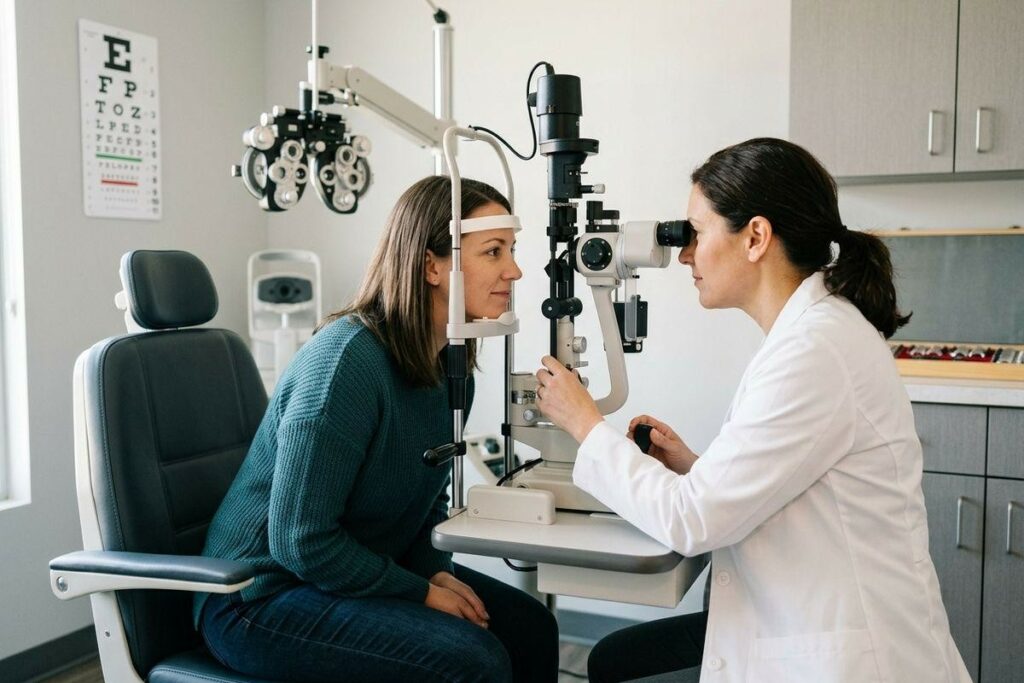
Your standard eye exam covers plenty of ground to evaluate your eye health. Your optometrist checks your visual acuity, which measures how clearly you see at different distances. They also evaluate your depth perception, check your peripheral vision, and measure your eye pressure.
If you need vision correction, you’ll walk away with a glasses prescription. However, a lot can show up in an eye exam that has nothing to do with how well you read a chart. An optometrist can spot early signs of eye disease, sometimes before you notice any symptoms yourself. The exam also checks how well both eyes work together, which affects things like reading, driving, and screen time.
What We Check During a Contact Lens Exam
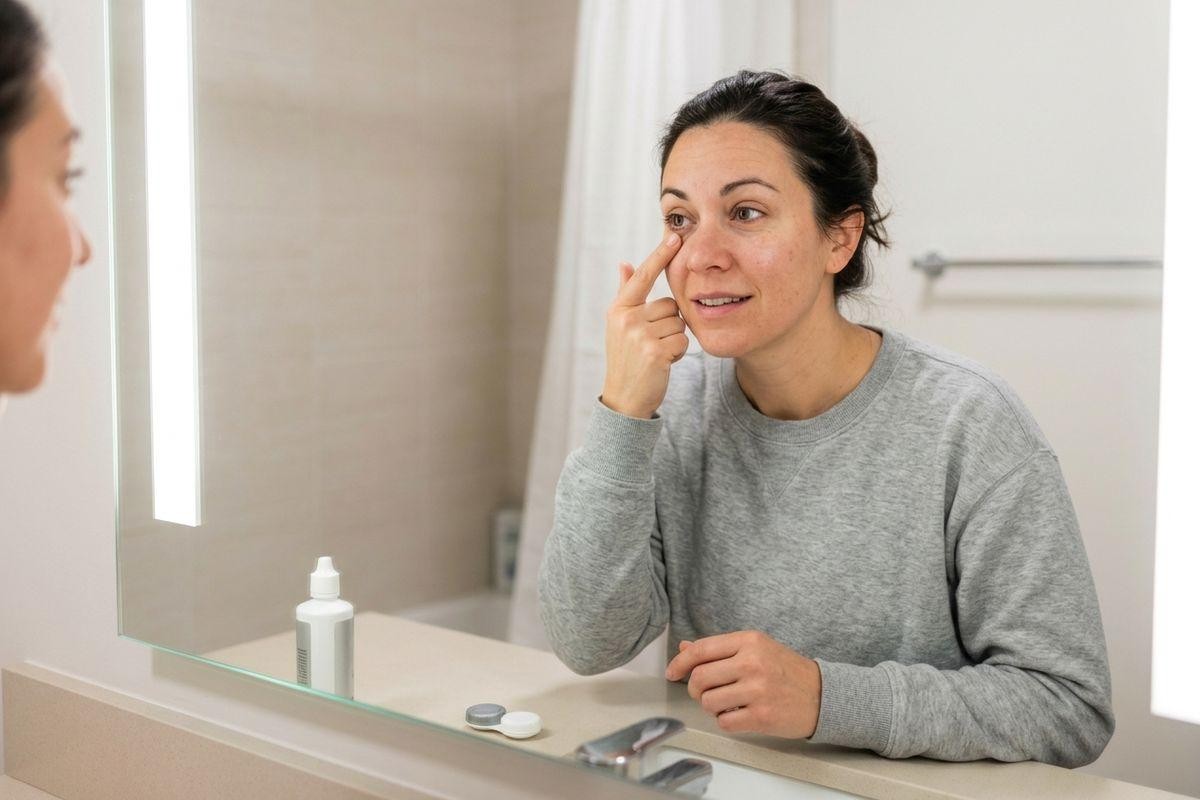
A contact lens exam starts with measuring your cornea, the curved surface at the front of your eye. That measurement helps determine the right lens size and shape for your eye. Contacts rest directly on the delicate surface of your eye, not in a frame a few inches away. Because of that, the lens’s size and curvature must match your eye precisely. A glasses prescription lacks this specific information, so you can’t use it to order contacts. Once your prescription is set, you can explore options that match your vision needs and lifestyle.
If changes are made from your current contact lenses, the process continues even after you leave the exam chair. Finding the right fit involves a few straightforward steps:
- Your optometrist dispenses and/or orders trial lenses and reviews the fit with you in the office as needed.
- You wear the trial lenses for one to two weeks to evaluate their comfort and clarity.
- Based on your feedback, your optometrist finalizes your prescription or makes adjustments.
This trial period takes the guesswork out of finding the right lens. Pay close attention to how your eyes feel at the end of a long day, rather than just right after you put them in.
How Often You Need an Eye Exam
Maintaining a regular exam schedule helps keep your eyes healthy. It’s a good idea to get both exams done every 12 months if you wear contacts. Prescriptions expire because your eyes change over time, and a lens that fit well last year might not be the right fit today.
A Note on Dry Eye and Contact Lenses
If your contacts feel dry, irritated, or uncomfortable by midday, dry eye might be playing a role. Tears provide a necessary cushion between the contact lens and your eye’s surface. When you lack enough moisture, the lens can rub directly against the cornea.
A contact lens exam helps identify these issues before they become a daily frustration. The optometrist evaluates your tear film quality during the visit to determine if standard lenses will cause discomfort. You can often still wear contacts even with dry eyes, provided you have the right support and lens material.
If dry eye is affecting your contact lens comfort, Signature Eye Care’s Dry Eye Spa offers in-office treatments like OptiLight IPL and TempSure Envi RF to help address the underlying causes, so you can keep wearing your lenses comfortably.
Keep Your Vision Clear with Contacts and More
Staying on top of your eye care means you can be confident you have the right prescription.
Signature Eye Care in Lincoln is here to help your family get the answers you need about your vision and eye health. If you’re ready to schedule a comprehensive eye exam, a contact lens exam, or both, book your appointment today.