

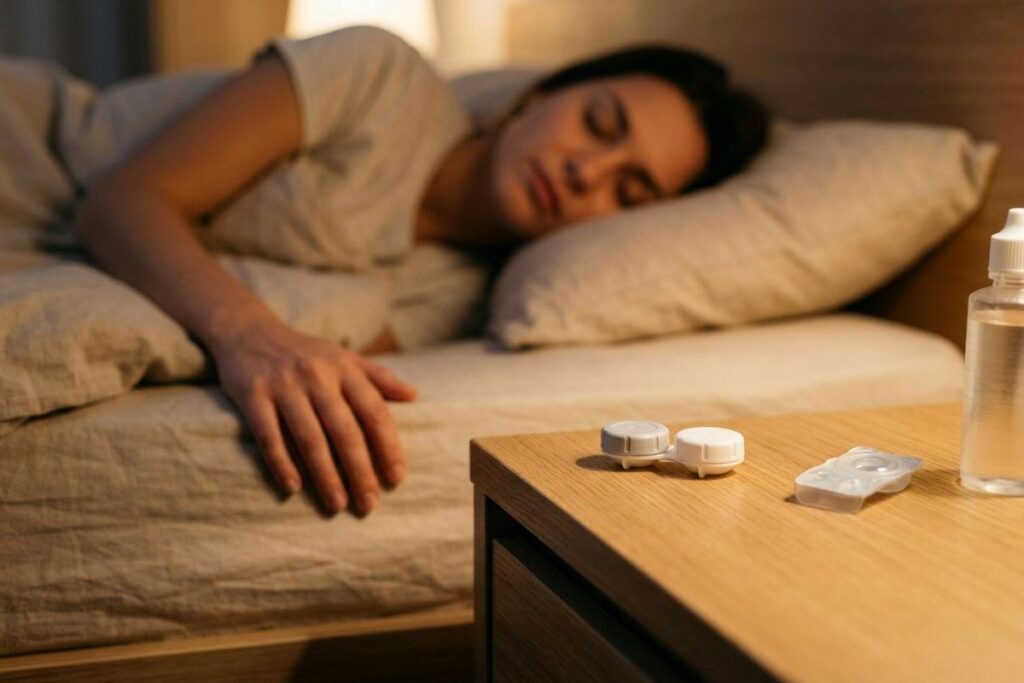
Imagine you had every intention of taking your contacts out before bed, only to fall asleep on the couch watching TV, and now you’re waking up with dry, gritty eyes and a lens that feels stuck to your eye. It happens to a lot of people, and the good news is that you can learn what to do next.
Sleeping in your contact lenses is not safe for most people, and doing it regularly raises your risk of serious eye problems. That said, knowing what actually happens to your eyes overnight, and what to do when it happens accidentally, can help you protect your vision and respond the right way.
What Happens to Your Eyes While You Sleep in Contacts
Your eyes need oxygen, and they get most of it directly from the air when your eyes are open. When your lids close for the night, that oxygen supply drops. Add a contact lens sitting on top of your cornea, and the flow drops even further.
At the same time, your eyes produce fewer tears while you sleep. That means your lenses start to dry out and press against the surface of your eye. Bacteria that would normally get flushed away by blinking and tear flow can get trapped underneath the lens. Overnight, those bacteria have hours to multiply without interruption.
How Overnight Wear Leads to Eye Infections
Sleeping in contacts raises your risk of eye infection by a significant amount compared to removing them each night. One of the more serious outcomes is a corneal ulcer, which is an open sore on the surface of your eye. Corneal ulcers can cause permanent damage to your vision, and they require prompt treatment.
These are not just scare tactics. They’re documented risks tied directly to overnight contact wear, and they’re worth taking seriously.
Dealing with Dryness, Redness, and Discomfort
On a less severe but still uncomfortable level, lenses that dry out overnight can stick to the surface of your eye. Pulling them off without preparation can scratch the cornea.
After sleeping in your contacts, watch for any of these signs:
- Eye pain or redness
- Blurry vision or sensitivity to light
- Discharge or excessive watering
These symptoms can indicate irritation or the onset of an infection. Don’t ignore them, especially if they stick around after you remove your lenses.
What to Do If You Fall Asleep with Contacts In
Waking up with your contacts still happens to the best of us. Don’t panic and avoid rushing to pull them out.
Follow these steps to handle the situation safely:
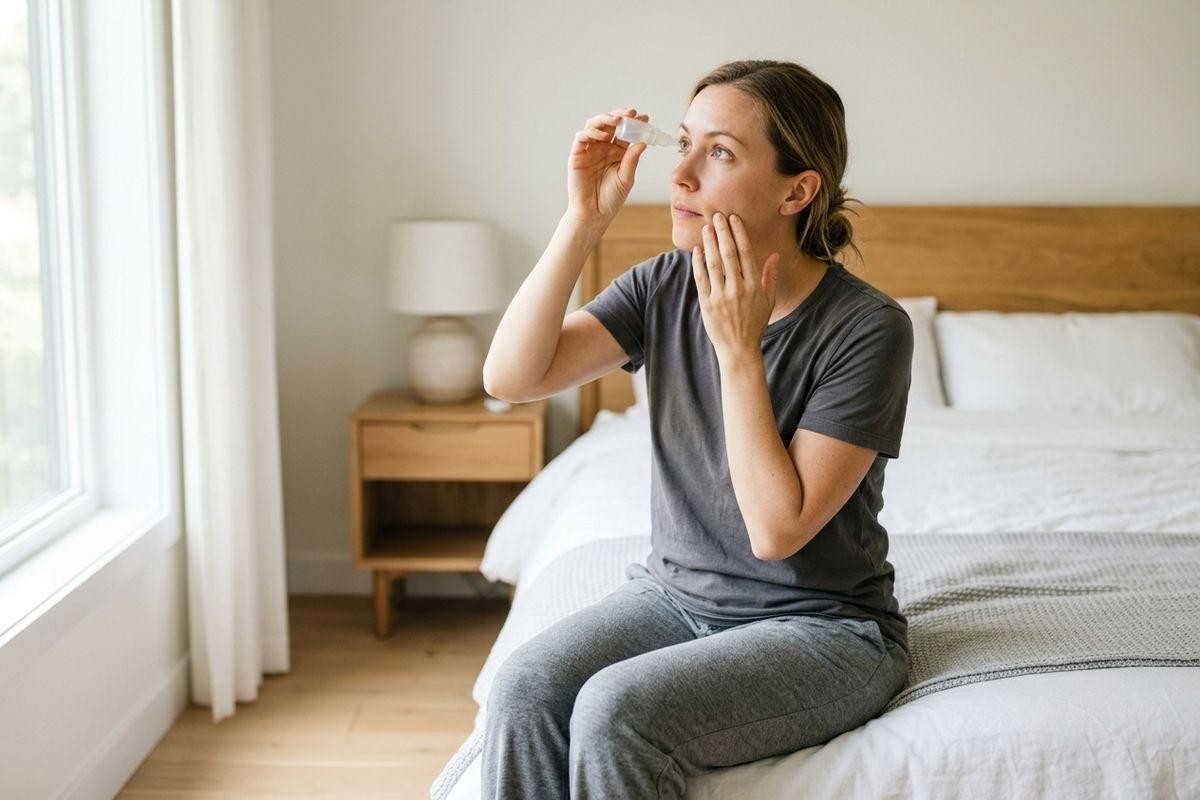
- Add rewetting drops before you touch the lenses to give them a minute to loosen up.
- Remove the lenses slowly and gently.
- Apply more drops and wait longer if they still feel stuck.
- Wear glasses for the rest of the day to give your eyes time to recover.
Some dryness and mild redness right after removal is common. This usually settles down within a few hours. Call your optometrist right away if the pain or discharge doesn’t clear up on its own.
Can You Nap with Contacts In?
A quick nap might feel low-stakes, but it still reduces oxygen flow and can dry the lens against your eye.
The risks may be lower than sleeping through the night, but they do not disappear just because the nap is short.
Take your lenses out first if you feel drowsy. It takes about 30 seconds and saves you a lot of discomfort later.
Contact Lenses Approved for Overnight Wear
Certain types of contact lenses are designed specifically for overnight wear. An optometrist can help you explore these alternatives if you prefer keeping your lenses in.
Extended Wear Lenses
Some contact lenses carry FDA approval for overnight or extended wear. These lenses are made from materials that allow more oxygen through to your cornea while your eyes are closed. That does reduce some of the risk, but it doesn’t remove it. Even if a lens is approved for overnight wear, you should only sleep in it if your optometrist has specifically prescribed that wear schedule for your eyes.
Ortho-K Lenses
Orthokeratology lenses, often called ortho-K, are a different category entirely. They’re rigid lenses intentionally prescribed for overnight wear to gently reshape the cornea, which can help reduce nearsightedness during the day without glasses or daytime contacts. An optometrist can evaluate your eyes to see if ortho-K fits your specific prescription.
If overnight wear is something you’re interested in for convenience or vision correction, that conversation is worth having with your eye care provider before making a change on your own.
Protect Your Vision While You Sleep
Your daily contact lens habits play a vital role in your long-term eye health. Give your eyes a chance to breathe and recover after a busy day at the office or running after the kids. Take your lenses out before your head hits the pillow and help keep your cornea healthy.
You don’t have to navigate these daily wear choices alone. Bring up any questions about overnight options or morning dryness during your next visit. Book an eye exam with Signature Eye Care in Lincoln and build a contact lens routine that fits your lifestyle without putting your eye health at unnecessary risk.