

You might think vision happens entirely in your eyes, but that’s only part of the story. Every time you look at something, whether it’s reading this article or watching your child play, your eyes and brain work as a coordinated team to create the images you see.
Your brain and eyes function as partners in a complex system where your eyes collect light and your brain transforms that information into meaningful sight. When this partnership works smoothly, you see clearly and comfortably. When it doesn’t, you might experience problems like eye strain, poor focus, or difficulty reading. Getting a comprehensive eye exam can help identify when this partnership needs attention.
Your Vision System Is More Than Just Your Eyes
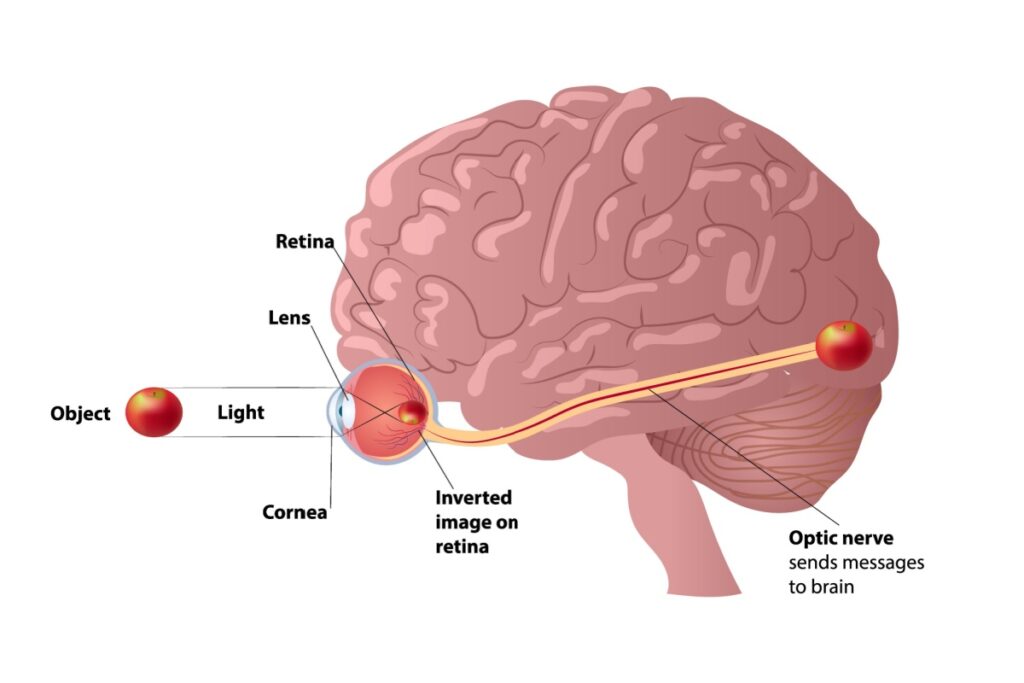
Think of your vision system like a camera connected to a computer. Your eyes act as the camera lens, capturing light from everything around you. Your brain serves as the computer, processing all that visual information and turning it into recognizable images.
This process happens in 3 main steps:
- Light enters your eyes and gets focused by your cornea and lens
- Your retina converts this light into electrical signals
- Your brain receives these signals and creates the complete picture you see
Your optometrist can evaluate this entire system during your exam. Comprehensive eye exams go beyond just reading letters on a chart to test how well your visual system works together.
The Journey From Light to Sight
When light bounces off objects around you, it enters your eyes through the clear front surface called the cornea. Your lens then fine-tunes the focus, just like adjusting a camera lens to get a sharp photo.
The focused light hits your retina at the back of your eye. Your retina contains millions of light-sensitive cells that convert the light into electrical signals. These signals travel through your optic nerve like a high-speed cable connecting your eyes to your brain.
Once those electrical signals reach your brain, the real work begins. Your visual cortex, located at the back of your brain, receives the signals from both eyes and starts putting together the complete picture.
Your brain goes through many processes to create the final image you see:
- It combines slightly different images from each eye to create depth perception.
- It fills in blind spots and connects separate pieces of information.
- It uses your memory to help you recognize familiar faces, objects, and places.
This complex process helps explain why vision therapy programs focus on training the brain-eye connection rather than strengthening eye muscles alone.
When Your Eye-Brain Connection Has Problems
Sometimes the partnership between your eyes and brain doesn’t work as smoothly as it should. You might notice these issues during daily activities like reading, driving, or working on your computer. These problems can affect people of any age, from school children to working professionals.
Common signs that your eye-brain connection needs attention include:
- Poor focus or blurry vision that comes and goes
- Eye strain during reading or computer work
- Difficulty tracking moving objects smoothly
- Problems judging distances or depth perception
- Seeing double images occasionally
- Headaches after doing visual tasks
If you’re experiencing these symptoms, vision therapy might help improve how your eyes and brain work together.
How Vision Therapy Trains Your Eye-Brain Team
Vision therapy works like physical therapy for your visual system. Structured exercises and activities help train your eyes and brain to work together more effectively. The goal is to strengthen the communication pathways between your eyes and brain.
During vision therapy sessions, you might practice exercises that improve eye coordination, focusing ability, and visual processing skills. These activities help your brain learn new ways to interpret and respond to visual information.
Who Can Benefit From Vision Therapy?
People often think vision therapy only helps children, but adults can benefit from it too! It can be more difficult for adults, as their visual systems have usually formed longstanding habits, but you can adapt and improve at any age, especially with proper guidance and practice.
Vision therapy can help:
- Children who struggle with reading or have trouble focusing in school
- Adults experiencing eye strain from prolonged computer work
- People recovering from head injuries that affected their vision
- Anyone whose eyes don’t work well together as a team
For adults, special Neurolens glasses can help correct eye misalignments that put extra pressure on the visual system.
How Neurolens Supports Eye-Brain Coordination
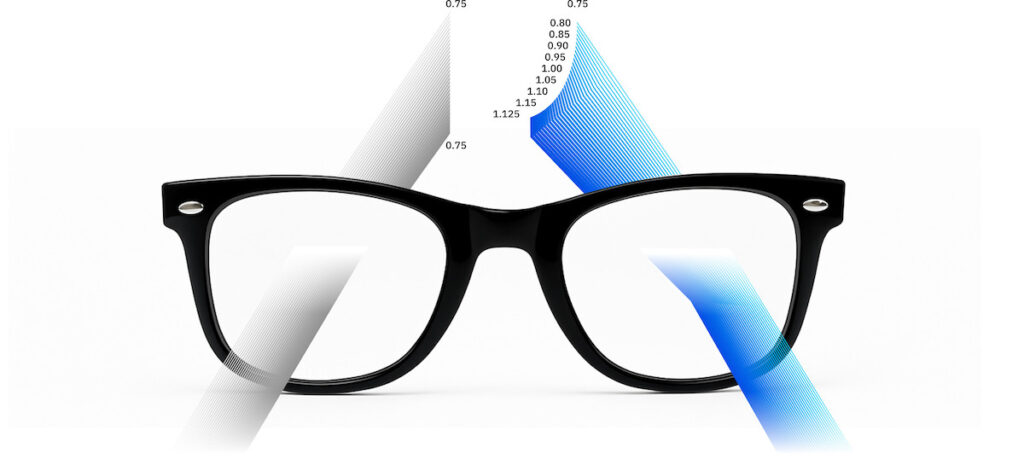
For adults dealing with eye misalignment, Neurolens glasses offer a different approach to relieving strain. These specialized lenses contain a contoured prism that helps correct subtle misalignments between your eyes, reducing the extra work your brain has to do to merge images from both eyes.
Many people have slight eye misalignments they’re not even aware of. Your brain compensates automatically, but this constant correction creates strain that builds up throughout the day. Neurolens helps by doing some of that alignment work for you.
Adults often notice improvement in:
- Headaches triggered by screen time or reading
- Neck and shoulder tension from unconsciously adjusting posture
- End-of-day eye fatigue
- Difficulty focusing after extended visual tasks
Unlike vision therapy, which trains your visual system through exercises, Neurolens provides immediate relief by correcting the misalignment optically. Some patients benefit from combining both approaches for comprehensive treatment.
How Dry Eyes Compound Eye Strain
If you’re already dealing with eye coordination or focus problems, dry eye symptoms can make everything feel worse. The scratchy, burning sensation of dry eyes adds another layer of discomfort on top of the strain you’re already experiencing from eyes that struggle to work together.
When you’re dealing with both issues at once:
- Reading or screen work becomes even more uncomfortable
- You feel fatigued faster during visual tasks
- It’s harder to tell which problem is causing which symptom
Treating your dry eyes alongside vision therapy or other treatments can provide more comprehensive relief. Getting proper dry eye therapy helps eliminate one source of discomfort so you can focus on addressing the underlying coordination issues.
Restoring the Eye-Brain Connection
If you’re experiencing vision problems, an eye exam can reveal how well your eyes and brain work together. During your exam, our optometrists can check how well your eyes track moving objects, focus at different distances, and work together as a team.
Whether you have dry eyes, eye misalignment, or any other issue with your visual system, we’re here with effective treatment options that will get you on the road to comfortable vision. You need care that makes sense for you, not a one-size-fits-all solution, and Signature Eye Care is ready to provide it.Schedule your appointment to learn more about how your eyes and brain can work better together.